Face to the Sun

I read somewhere the flower head (capitulum) of a sunflower will track the sun when it is young and growing, and will eventually face east when mature. Tracking the sun in this manner is called heliotropism. To me, it’s a bit of magic in the plant world.

WATERCOLOR OF SUNFLOWER

Many articles have been written about the common sunflower (Helianthus annuus) and why the flower heads follow the sun. It’s believed there is unequal growth in the plant stem. The east side of the plant stem grows more during the day than the west side, and vice versa during the night, thus allowing the flower head to move. But that changes when the plant is mature and its stem stiffens; then the flower head will face the east.

I sometimes wonder whether it’s somewhat similar for humans. No, not that we grow more on one side than the other. But that we excel when we turn our face to the sun and feel the first morning light hit the face with a gentle warmth and a promise of the day to come. Is that fanciful? Perhaps.

But I know I experience a lift to my mood when the sun is shining. I also know I feel my mood elevate when I see the the extraordinarily beautiful creatures and plants that nature provides. Maybe, just maybe, that’s my equivalent of having my “face to the sun.” Here’s some of my face to the sun moments from earlier this week…

Just before I put on my sandals to go out for a walk, this glorious creature appeared on the bushes by the patio. It made me stop in my tracks and grab the cell phone for a quick photo. A very obliging creature I must say. It’s a female Eastern Tiger Swallowtail. While males and females are both yellow, only the female has the blue wash of color near its tail. It’s even more miraculous to see considering its lifespan is only about two weeks.

EASTERN TIGER SWALLOWTAIL FEMALE

Okay, so I’m now on my way for a walk, and this creature greets me as I head out the front door. A Hummingbird Clearwing moth on another butterfly bush. Again, very accommodating to allow a cell phone so close for a photo. I’ve read these creatures only have one brood in northern states, laying small green eggs on the underside of leaves. Once hatched, they feed on plants and then drop to the ground to spin a cocoon and pupate where they will hide amongst leaf litter during the winter until they emerge in the spring. Yet another reason why allowing some leaves to remain on the ground can be a very good thing.

HUMMINGBIRD CLEARWING MOTH

Now, on with my tale…so I’m headed out for a walk when I also encounter this beautiful little Common Eastern bumblebee on a Great Blue Lobelia plant. The bee is a tiny female – only about half the size of what one normally thinks a bumblebee should be. She’s a great worker for the colony. See the yellow pollen on the hind leg? She sweeps the pollen off her legs and it collects in what’s known as the corbicula (pollen basket) on the hind legs. It’s how she carries this food back to the nest for the young.

COMMON EASTERN BUMBLEBEE ON GREAT BLUE LOBELIA

You never know what you’re going to see when you’re out walking. Some of the most amazing things we so easily overlook. Like this Chicory plant. It’s a pretty common sight. It grows quite readily along roadsides at this time of year. The flowers open in the morning, and close up in the early afternoon after a morning of sunshine. The bloom only lasts one day. And new blooms appear the next day. Amazing that this plant can so easily handle bad soil and road salt. I admire it for it’s toughness. And beauty.

CHICORY

We have a lot of Common Mullein growing along the bike trail this time of year. They’re huge, spiky looking plants, some easily reaching six feet tall. It’s an invasive plant in Ohio. But when you look very closely at the flowers, they’re amazing. This little Western Honey bee seems to think so. Easy to see the pollen collected on its hind legs.

WESTERN HONEY BEE ON COMMON MULLEIN

And finally, one more beautiful creature that also caught my attention and made me smile. A female Monarch butterfly on Purple Coneflowers. She’s a beautiful specimen. No torn or tattered wings. A Monarch will go from egg, to larvae, to pupa to adult butterfly in just about 30 days. And most likely she will soon be heading south for Mexico with the goal of reaching her destination in November, as I believe she may be fourth generation.

MONARCH ON PURPLE CONEFLOWER

There are so many beautiful things to observe in nature, just like the sunflower that turns its face to the sun tracking its warmth, growing tall and strong. I believe by observing and appreciating the beauty of nature around us every day that we too can experience the feeling of having our “face to the sun.”

Until next time, keep observing nature up close.

Gossamer wings…

Butterflies always mesmerize me – enough so that I’ve been known to instantly stop in my tracks to admire and observe. So much beauty in such a delicate fragile package. A true miracle of nature.

I try to put names to them, but even more importantly I like to focus on their behaviors. Some flit by your face and do a few circles around you like some Eastern Tiger Swallowtails have done to me quite often. Though once in awhile, one lands and does a nice pose.

Even the underside of their wings are colorful with vivid orange and blues with a black stripe along the body.

Some butterflies are so absorbed in their acquisition of nectar that they’re practically oblivious to humankind, unless that is, you get too close, move suddenly or create a shadow over them. So…maybe they’re not so oblivious. Perhaps that’s what makes the photography such a challenge.

Zebra Swallowtails are rather notorious for flitting quickly and avoiding photos, at least in my experience. They’re a very beautiful butterfly, perhaps because I so rarely see them, although they are found in the eastern U.S. Their host plant for laying eggs is the Pawpaw tree as this is the only kind of food the caterpillars will eat, which is somewhat similar to the Monarchs requiring milkweed.

There is another type of Zebra butterfly; this one is the Zebra Longwing. While somewhat similar, it’s overall shape is quite unique. They are typically found in southern states in the U.S. plus parts of Mexico and Central America. Its grace and beauty are unparalleled.

Zebra Longwings are unique not only in looks but also in lifespan. Most butterflies lifespans are just one month or less, while the Zebra Longwing can live up to six months because they eat not only nectar but also pollen. They collect pollen and externally secrete a substance to combine with the pollen to make it liquid so they can drink it. The pollen helps extend their lifespan.

Of course, there are exceptions to standard butterfly lifespans. The Monarch lifespan can be 2 to 6 weeks except for the last generation which (I’ve read) can live about 8 months. This is the generation that migrates south in the fall and north in the early spring. There are other butterflies that overwinter as adults in Ohio including the Mourning Cloak, Eastern Comma and Question Mark.

And…here’s a photo to exemplify that Zebra Longwings and Monarchs play well together.

There are many beautiful and unique butterflies out there. Take this Question Mark for example. It’s shape is very similar to the Eastern Comma with the most distinguishing feature the pattern of dots on the forewing, and even then it’s easy to confuse the two. Both the Question Mark and Eastern Comma feed on nectar and enjoy the liquid from rotting fruit. It’s a super sugar charge for them.

The White Peacock is another beauty on the wing found in predominantly south Florida and southern Texas in the U.S. and also in Mexico and Central America. This beautiful creature feeds on nectar from plants such as Spanish Needle which was plentiful in many parts of Florida. This gorgeous beauty unfortunately has been in battle and lost part of it’s wing.

Another butterfly found in southern states is the Queen. It’s a majestic beauty with mahogany brown wings illuminated by white spots and outlined in black. Stunning! The Queen and the Monarch can easily be mistaken for one another due to their similar coloring, but they also have another factor in common. They both feed on milkweed and are toxic if birds should decide they look edible.

And not to be outdone is the Spicebush Swallowtail with it’s vivid black and blue coloring. As the name implies, it’s hostplant is the spicebush though I’ve read they also like white sassafras as well. The adults favorite source of nectar is Jewelweed, Joe-pye weed and honeysuckle.

And here’s a second photo of the Spicebush swallowtail that shows rather dramatically the “tail” in swallowtail.

Another colorful butterfly is the Common Buckeye with its toasty brown and orange coloring with eye-catching eye spots, though this photo isn’t a good rendition of that with it’s faded coloring and tattered edges. This little one has seen better times.

One of the largest and most magnificent butterflies is the Eastern Giant Swallowtail. It has a wingspan of up to or more than 6 inches. It is actually the largest butterfly in North America. Nectar plants for this butterfly include milkweed, butterfly bush and zennia. Once you see this beauty flying about, you just may be out there planting things that attract it. It’s pretty memorable to see.

The photos of the butterflies I’ve shared with you in this blog were taken while in Florida this past winter. Their beauty brightened my winter adventures and brought smiles to the face. I hope they brought smiles to your face as well.

Until next time, keep exploring nature up close.

Nature at our Doorstep

I’m finding after months of hearing way too much news about Covid that I’m a bit on edge and desperately searching for avenues of normalcy. But, as always, I make sure I have a mask in my pocket when I walk out the door of the house with camera in hand.

In an effort to explore further afield, I’ve been trying to include a weekly “day trip” to different nature preserves. It feels a bit like a mini-vacation and provides the fun of exploring new areas while staying away from news headlines. That’s a win-win in my book.

JOHNSON WOODS NATURE PRESERVE OLD-GROWTH FOREST

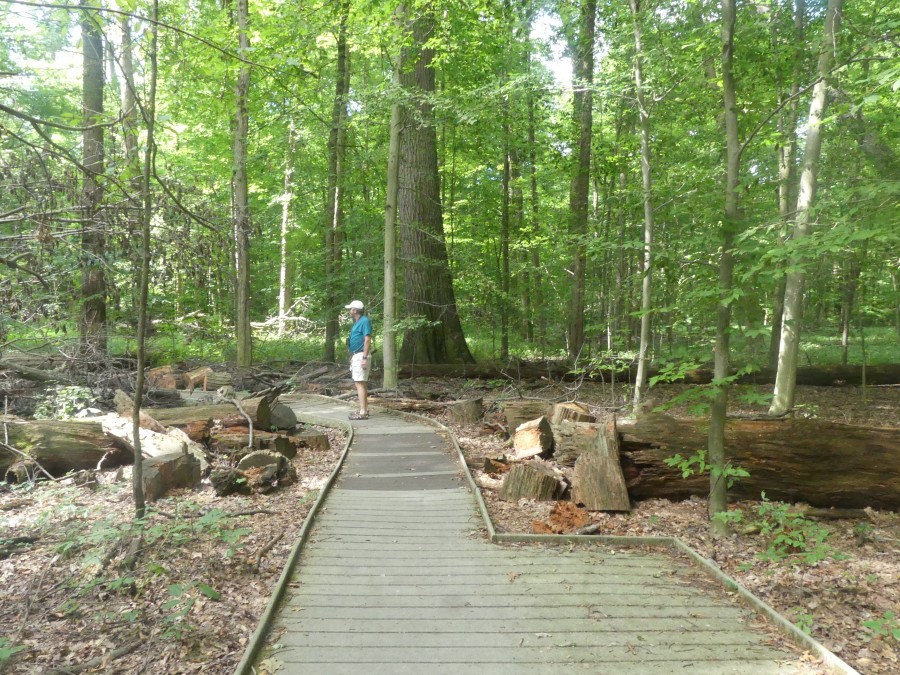
There’s a terrific 200-acre old-growth forest in north eastern Ohio in Wayne County called Johnson Woods Nature Preserve. Some trees are said to be 400 years old. Signage states “Johnson Woods appears to be the largest and best old-growth woods found in Ohio.” And I would agree with them. My photos do not do it justice.

Upon entering the forest and walking on the 1 1/2 mile boardwalk trail, we were greeted by newly fledged Eastern Wood-Pewees being fed by a parent. Cute little guys that couldn’t quite fly straight nor land on a branch without wobbling a bit. But they’ll learn.

EASTERN WOOD-PEWEE

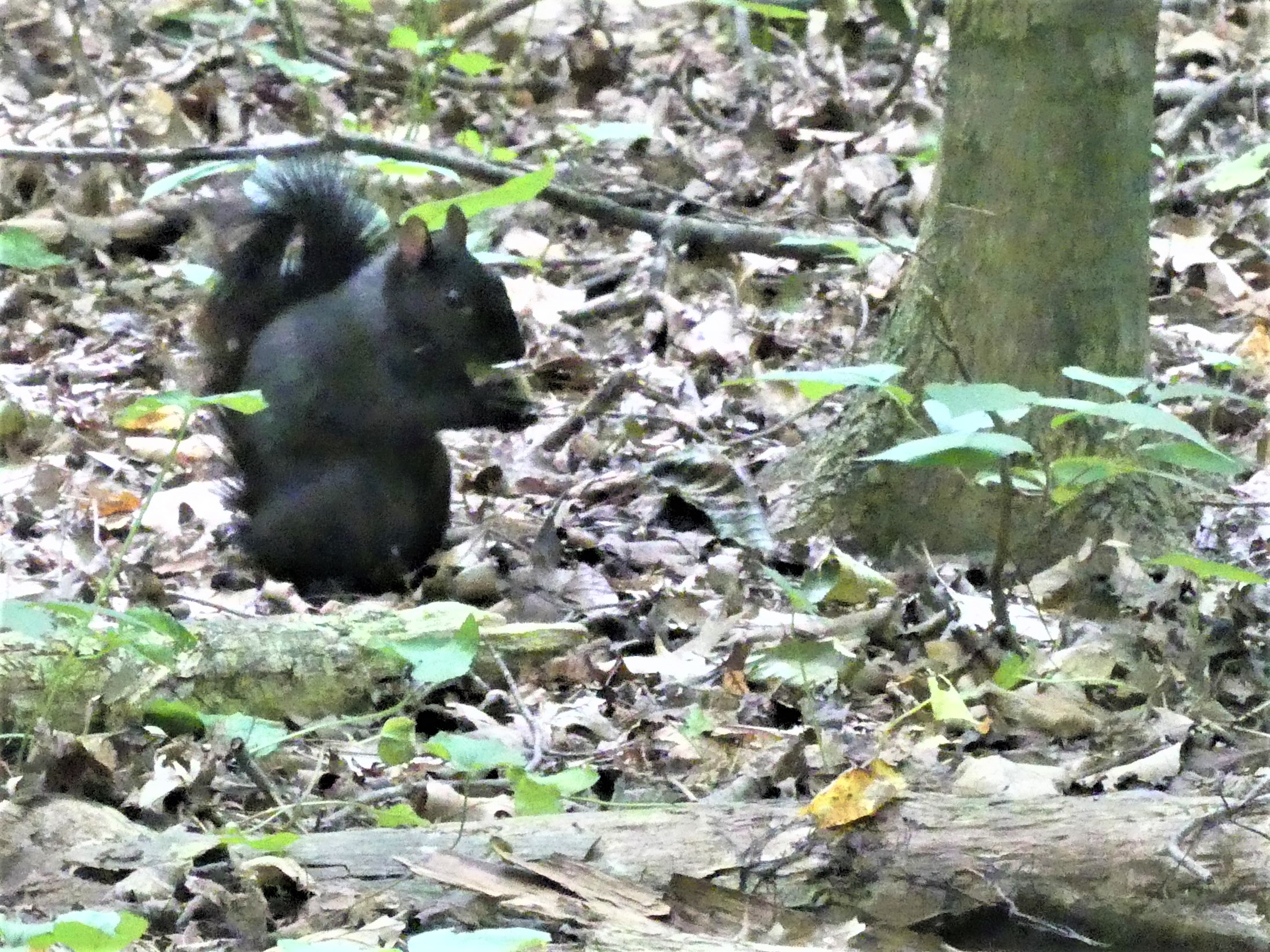
Eastern Gray Squirrels were plentiful, including black ones. I always thought the black ones were a separate breed, but found otherwise. Smithsonian says they’re a result of interbreeding between gray and fox squirrels which results in a faulty gene giving them their black color. According to Wikipedia, this occurs in less than 1% of gray squirrels. Some say the black squirrels are more aggressive and territorial.

The boardwalk is quite an accomplishment all by itself. The woods looks like it could be quite wet in the spring, so this would be the only way visit and maintain dry feet. More than 60 species of wildflowers have been documented here in the spring. Cardinal flowers were blooming quite well this past week and close enough to the boardwalk to get a picture.

1 1/2 MILE BOARDWALK
CARDINAL FLOWER

While you’re in this area, it’s well worth a trip to Barnes Preserve as well. It’s a nature park that is very close by. While it also offers walks through a woods, it’s the flowering meadows, vernal pool and pond that attract the eye here. And very few visitors. Makes one feel like it’s your own private nature preserve!

BARNES PRESERVE POND

Follow the trail through the meadow and down a wood-chip path to this glorious little pond. A wonderful place to contemplate the world – or just watch nature around you and absorb the peaceful setting. Like the mother mallard duck with her 8 nearly-full-grown babies following her every move through the pond. Or watch the Azure Bluet damselfly or Widow Skimmer dragonfly flit about the pond and grasses.

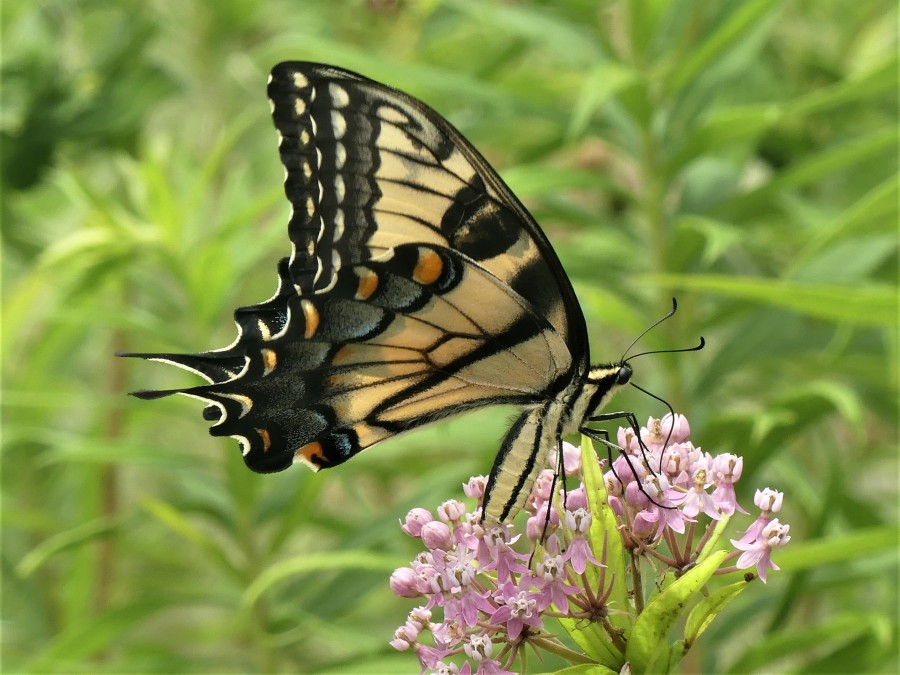
The wildflower meadow there is spectacular. Blue vervain was growing in magnificent patches, along with milkweed which was attracting many butterflies like this Eastern Tiger Swallowtail.

BLUE VERVAIN
EASTERN TIGER SWALLOWTAIL

Also in the meadow was what I think is a Rosepink. It’s a beautiful flower that has the most magnificent color. It’s a biennial which flowers in its second year and grows up to three foot tall. It’s common to the eastern United States, but it’s a new one for me. Looks like Mother Nature got out her water color paints to do this one.

Tucked into a corner of the woods was a little wetland pond that had been built as a class science project. It was shallow enough to attract quite a number of frogs as well as the most beautiful red Meadowhawk dragonfly. I thought perhaps it was a Ruby Meadowhawk (a new one for me), but I later learned that this dragonfly is very difficult to identify unless you have it in hand, and even then it’s not a sure thing. Oh well, a girl can dream…

MEADOWHAWK DRAGONFLY

I hope you’ve enjoyed the travels through these preserves. There’s so many wonderful things in nature to observe and explore. And it may be even closer than you think.

I can highly recommend a day trip to a preserve to give you a new perspective and appreciation of nature. It’s a great way to let go of problems and worries and ground oneself to what really matters. Nature doesn’t seem to be one bit bothered by Covid. Stay safe.

Until next time, keep exploring nature up close.